Building a unified transportation experience
I unified multiple transportation experiences into a scalable UX framework for diverse markets, modes and user intents.
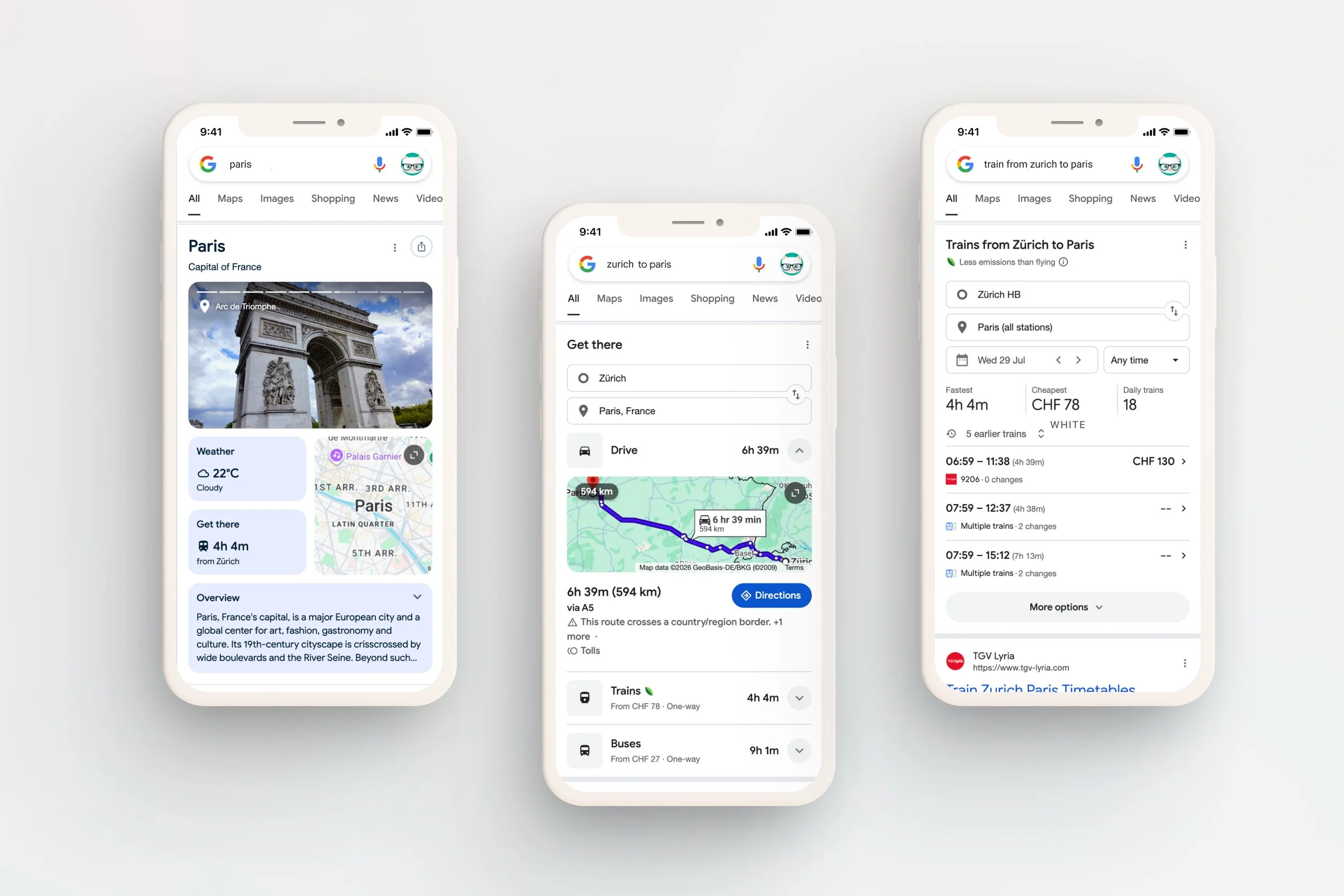
Tasks Overview
Transportation experiences had evolved across different surfaces, modes and markets in Google Search. Each unit solved similar problems in slightly different ways, creating inconsistency for users and duplicated decision-making for teams.
My role was to define where the experiences should share a common foundation and where local or mode-specific flexibility was necessary by establishing shared framework around user intent, information hierarchy and reusable interaction patterns.
Case study: Unified UX framework for Trains & Buses
*Some details have been simplified or omitted to respect confidentiality.
The challenge
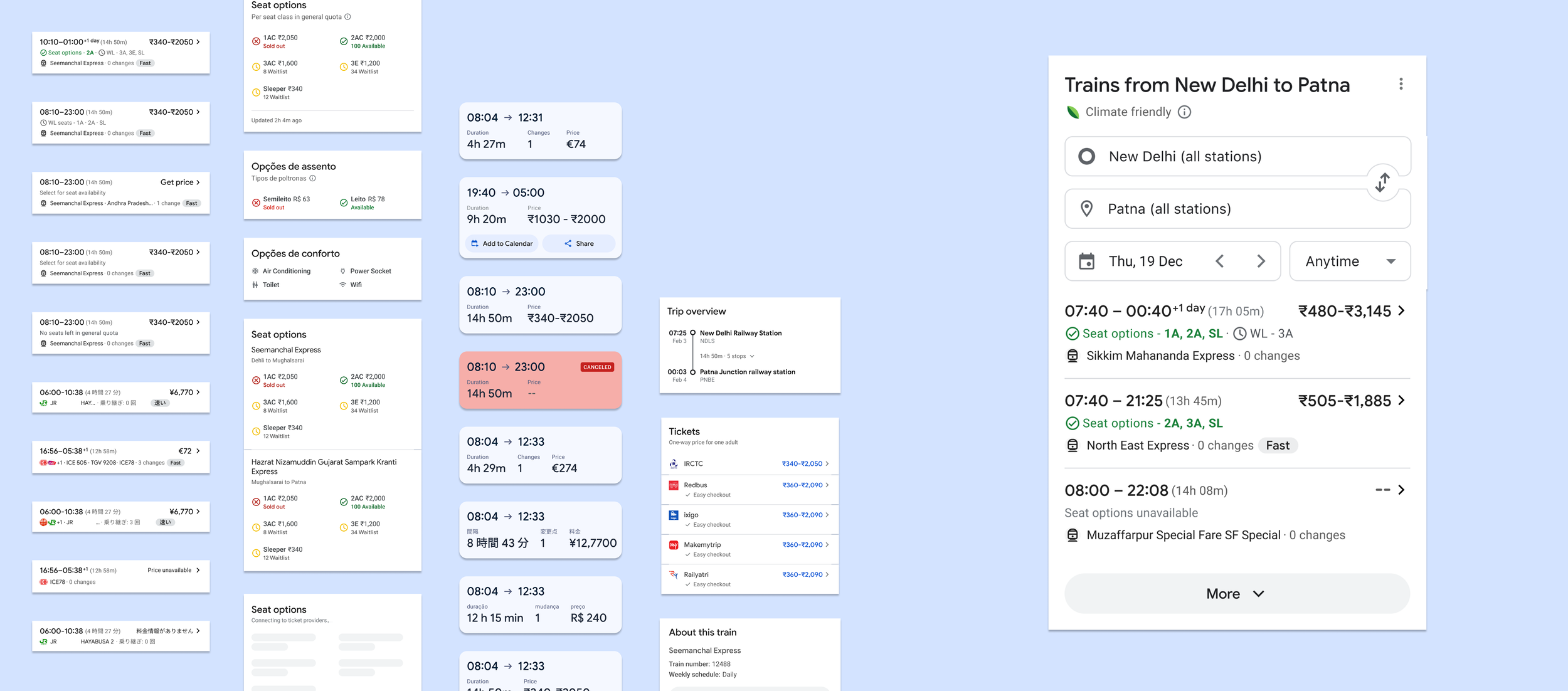
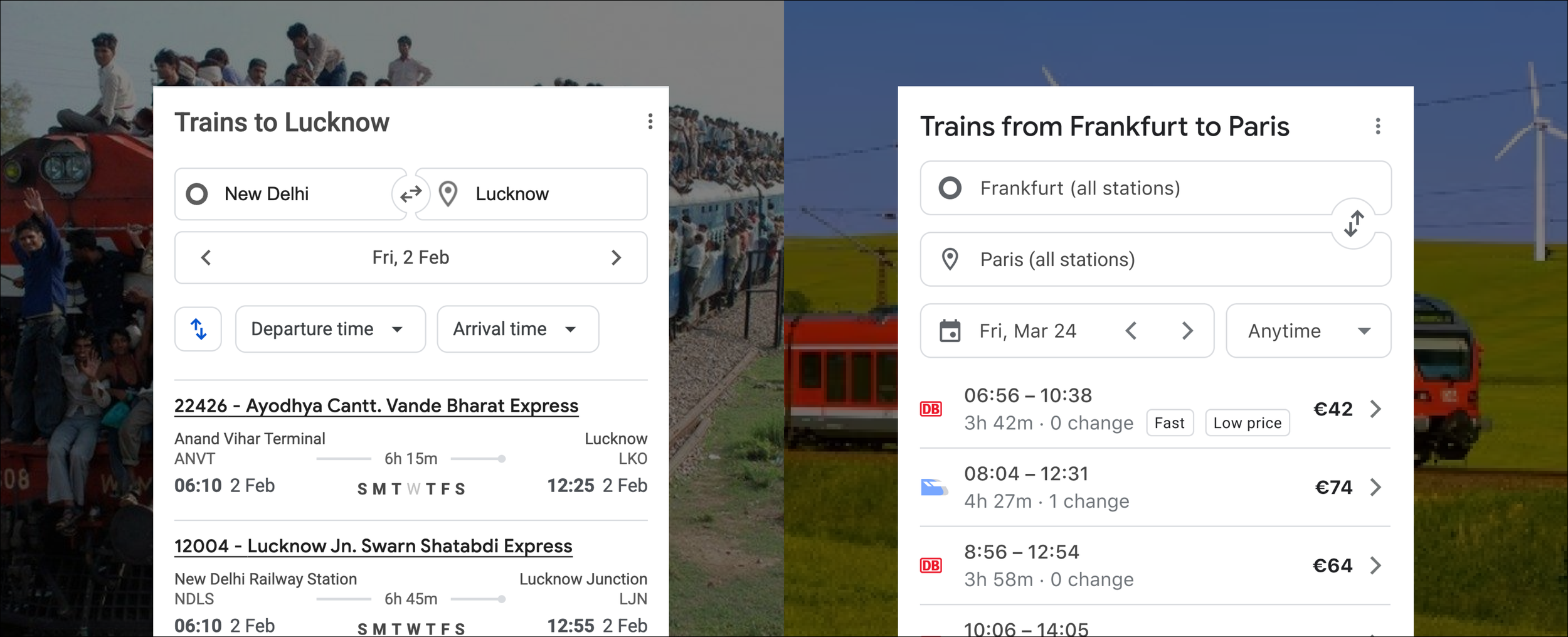
A highly localized train search experience had evolved separately from the broader transportation ecosystem. This allowed the product to respond closely to local user needs, but it also introduced inconsistency, duplicated effort and greater maintenance complexity. The challenge was to preserve meaningful local relevance while creating a more coherent and scalable experience.
My role
I led the UX definition of a unified framework that could support both shared transportation needs and market-specific requirements. My responsibility was to determine:
what should remain consistent across markets
where local flexibility was necessary
how both could coexist within one scalable interaction model
Approach
Research across multiple markets revealed a common set of journey needs, alongside differences in information, terminology and user expectations. Rather than standardising every experience into one rigid template, I created a layered framework; a shared foundation for common journey information and interaction patterns and flexible modules for local or mode-specific requirements. This allowed the experience to remain coherent without removing the differences that mattered to users.
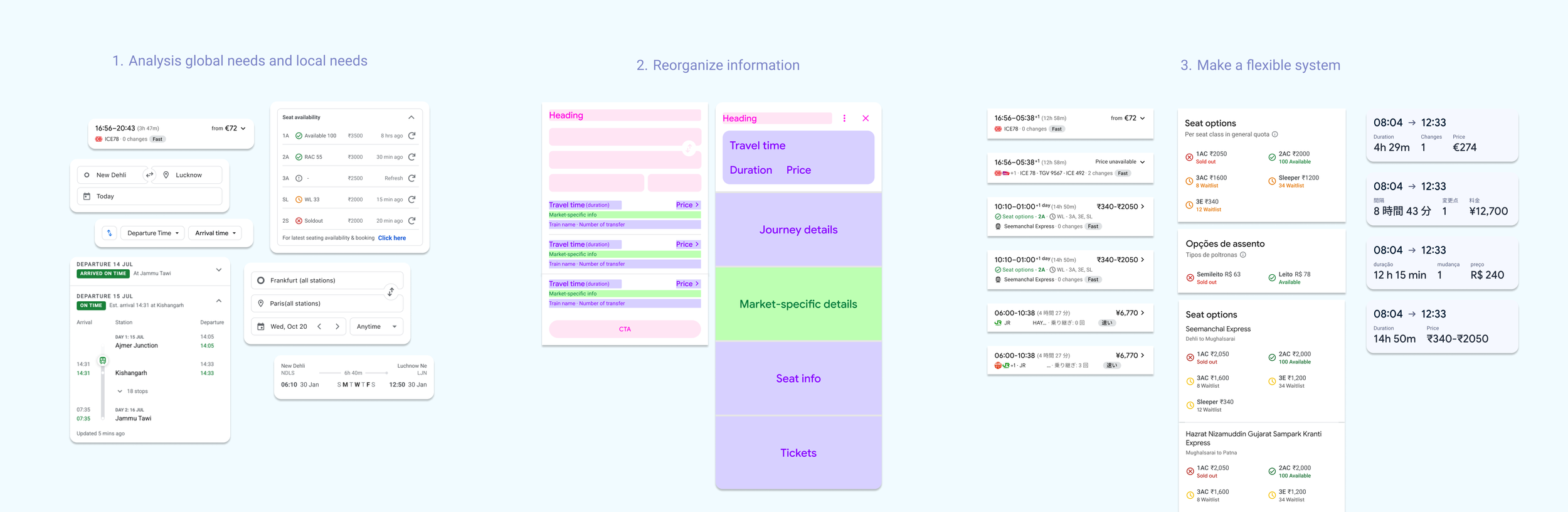
1. Analysis global core and local needs
The local implementation had treated the entire Indian experience as a separate product. I reframed it as two layers as Global core that ensures common user needs, and Local modules. This allowed teams to preserve meaningful local needs without duplicating the full experience.
2. Reorganize information around user decisions
The existing implementation reflected the structure of local data and product units. Through user testing, I reorganized the seamless experience around the decisions users needed to make, which were great opportunities to ensure the different interpretations on the localised terminology as well. This created a consistent hierarchy that could work across markets while allowing local details to appear progressively where needed.
3. Make flexibility part of the system
Instead of treating localisation as an exception, I designed configurable patterns into the framework.
Shared components defined the base hierarchy and interaction behaviour, while market-specific modules could be added, removed or adapted without changing the entire system.
This gave local teams flexibility without fragmenting the product.
Collaboration and alignment
A major part of the work was aligning different perspectives. The local team needed to preserve established Indian travel conventions. Engineering needed to reduce duplication and maintenance complexity. The central UI team needed consistency across Search along with accessibility compliance. I used research findings, market comparisons and design prototypes to make the trade-offs visible and create agreement around where consistency created value and where local flexibility was essential. The documentation of the each design steps became a shared decision-making tool, not only a design deliverable.
Outcome
The unified framework created a scalable foundation for transportation search across markets and surfaces. It helped:
Unified two separately maintained implementations into a single frame/ tech stack
increase daily users
reduced usage refinement
Maintain the coherent design system across global transportation market
The most valuable outcome was not a single interface, but establishing a shared way for teams to decide where consistency mattered, where flexibility was necessary and how new local requirements could be added without fragmenting the system again.
Reflection
This project changed how I think about global product systems. Consistency does not mean making every market identical. The role of a strong framework is to make the common structure clear, the exceptions intentional and the system flexible enough to evolve.